Bicycle Day SF: A Conversation with Josh Pollack

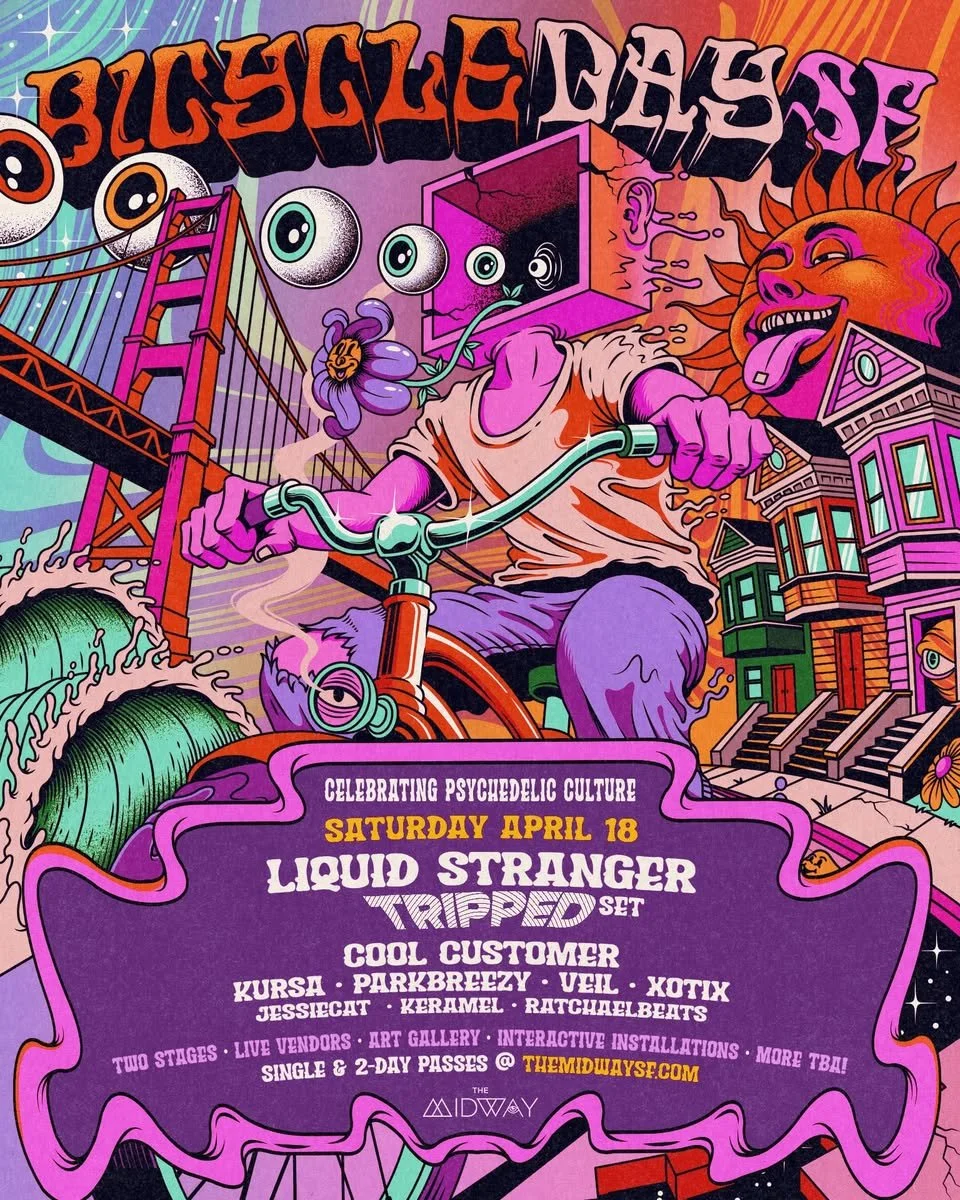
This week on the KSVY Morning Show, I had the chance to sit down with Josh Pollack, producer of Bicycle Day SF, to talk about the culture, history, and evolving energy around this unique event happening April 18–19 at The Midway in San Francisco.

Bicycle Day marks the anniversary of Albert Hofmann’s now-legendary 1943 bicycle ride — the first intentional LSD experience — and over time it’s grown into something much larger: a global touchpoint for creativity, consciousness, and exploration.

Josh has been producing music and art events since 2006, and what struck me in our conversation is how intentional he is about creating not just events, but environments. Spaces where people can connect — to music, to ideas, and to each other.

Bicycle Day SF reflects that ethos. The event unfolds as a fully immersive evening experience, transforming The Midway into a multi-sensory landscape of sound, light, and movement. With artists like Liquid Stranger and Infected Mushroom on the bill, there’s a strong musical core — but it’s really about the total experience.

We also talked about the deeper cultural thread — how this moment in psychedelic history continues to evolve, and how important it is to honor the roots while creating something relevant for today.

It’s very much in the spirit of the Bay Area — experimental, open, and rooted in community.

🎧 You can listen to the full conversation here:

If you’re curious about the intersection of music, culture, and consciousness — this one’s worth a listen.

Born Sick in the USA: Rethinking Health as a National Condition

What if the real patient in our healthcare system isn’t you or me—but the country itself?

That’s the question I opened with when I sat down with Dr. Steven Bezruchka on the KSVY Morning Show, and it’s the one that stayed with me long after the microphones were off.

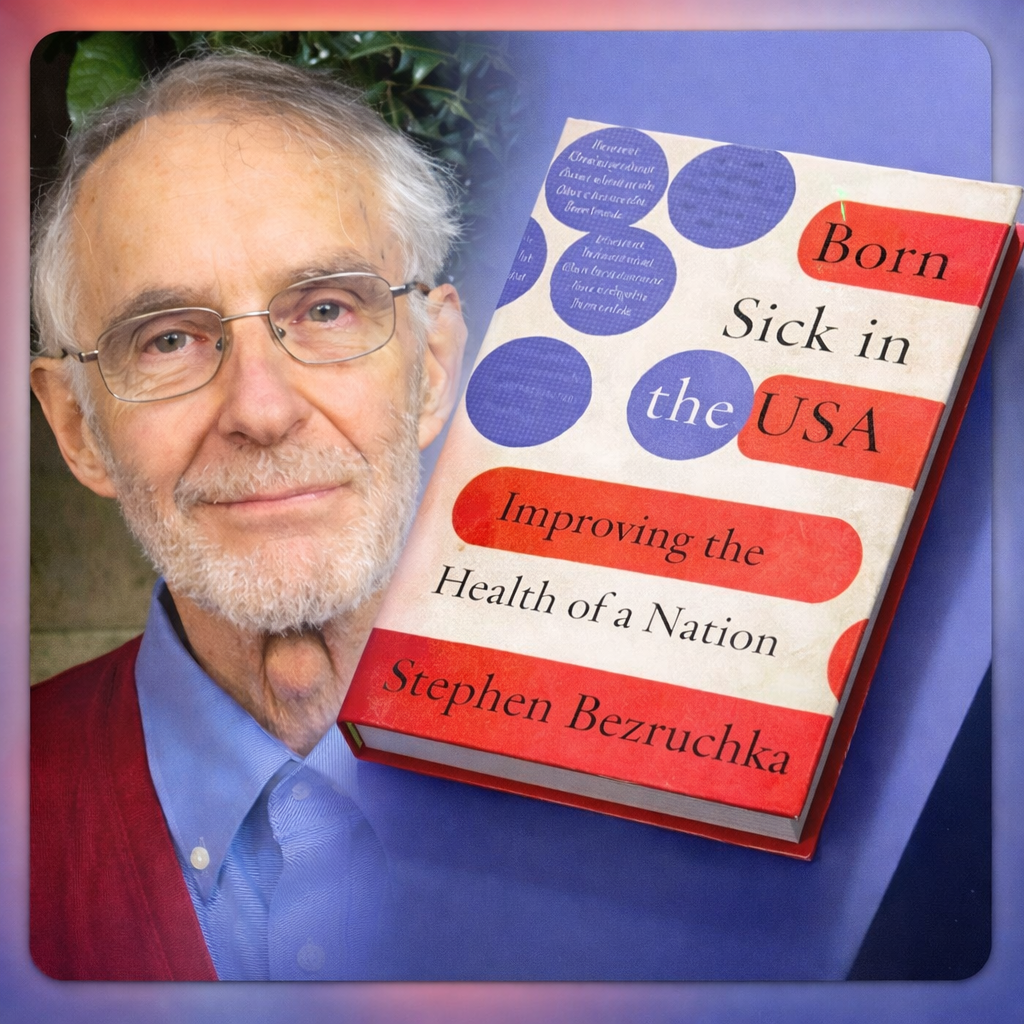
Dr. Bezruchka, author of Born Sick in the USA: Improving the Health of a Nation, makes a striking argument: Americans are sicker than people in other wealthy nations—not because of our individual choices, not because we’re failing to eat right or exercise enough—but because of the conditions we’re born into and the society we’ve built together.

That’s a big shift.

We’re used to thinking about health as personal responsibility. Take the right supplements. Eat the right foods. Get your steps in. Optimize your routine.

But what if that’s not where the real story is?

The First 1,000 Days

One of the most powerful insights from our conversation is just how much of our health is shaped before we even have a say in it.

Dr. Bezruchka points to the first 1,000 days—from conception through early childhood—as the period where roughly half of our adult health is “programmed.”

And here’s where the United States falls behind.

Unlike most wealthy nations, we don’t guarantee paid leave for new mothers. We don’t consistently support early life in the way healthier countries do. That means, from the very beginning, many Americans are starting from a disadvantage.

You can do everything “right” later in life—but if you’re already behind at the starting line, it’s hard to catch up.

Inequality Isn’t Just Economic—It’s Deadly

If early life is one pillar, inequality is the other.

Dr. Bezruchka doesn’t mince words here: inequality kills.

There are hundreds of studies linking income and wealth inequality to worse health outcomes. The more unequal a society becomes, the shorter and less healthy people’s lives tend to be.

And the United States? We’re one of the most unequal—and increasingly so.

What’s striking is that this affects everyone.

Even the wealthiest Americans are less healthy than their counterparts in other wealthy nations. That’s how powerful the system-level effects are. This isn’t just about poverty—it’s about the structure of society itself.

Healthcare Isn’t the Same as Health

Here’s another reframe that really landed for me.

We talk constantly about healthcare—access, insurance, costs—as if that’s the same thing as health.

It’s not.

According to Dr. Bezruchka, healthcare accounts for maybe 10% of health outcomes.

The other 90%?

That comes from social conditions—early life, stress, inequality, environment.

And yet, the United States spends more on healthcare than any country in the world. Nearly half of global healthcare spending happens here.

So the question becomes: if we’re spending the most, why aren’t we the healthiest?

Because we’re treating symptoms, not causes.

A Stressed-Out Nation

One of the more sobering parts of the conversation was around stress and mental health.

We are, by many measures, one of the most stressed countries in the world. We consume a disproportionate share of psychiatric medications and opioids, while still experiencing rising rates of mental illness and suicide.

Instead of asking why demand is so high, we often focus on controlling supply.

But the deeper issue, as Dr. Bezruchka frames it, is the environment we’re living in—the pressure, the inequality, the instability.

In other words, the system is making us sick.

So What Do We Do?

If the country is the patient, then the treatment isn’t just individual—it’s collective.

Dr. Bezruchka points to policy-level changes: reducing inequality, investing in early life, rethinking how resources are distributed.

But he also offers something more immediate.

Talk about it.

Develop what he calls an “elevator speech.” Learn how to explain these ideas simply, clearly, and share them—with friends, with coworkers, even with the next telemarketer who calls your phone.

Because change doesn’t just happen through policy.

It happens through conversation.

Listen to the Full Conversation

We covered a lot more ground in this interview—from mental health to the political economy of healthcare.

👉 Listen to the full conversation here:

If there’s one takeaway, it’s this:

Health isn’t just something we manage individually.

It’s something we create collectively.

And right now, we’ve got some work to do.

Empathy on Air: A Conversation with Sally Kohn in a Fractured Tim

I spend a lot of time thinking about what it means to hold space on the air.

Not just to talk—but to listen. Not just to inform—but to connect.

And in a moment like the one we’re living in now, that work feels heavier. More complicated. More necessary.

Recently, I sat down with Sally Kohn on KSVY Sonoma 91.3 FM for a conversation that, on the surface, was about empathy. But what it really became was something deeper—a look at how we communicate across difference, and what responsibility media carries in shaping that exchange.

👉 Listen to the full conversation here:
Rethinking When “It Got Bad”

Like a lot of people, I came into the conversation with a timeline in my head.

I pointed to Sally’s time at Fox News as one of the most polarized periods in modern media. It felt like an obvious reference point—the arena where division was most visible, most amplified.

But she gently pushed back.

It wasn’t the peak, she suggested.

It was the precursor.

That shift matters.

Because it reframes polarization not as a sudden rupture, but as something that was already forming. What we often point to as the moment things broke may actually be the moment we started noticing the break.

Not the beginning—just the point of visibility.

When the Conversation Leaves the Studio

About two weeks after our interview, The Press Democrat—the largest newspaper in Sonoma County—shared an article on their Facebook page about Sally’s upcoming appearance.

And the comment section filled up.

Vitriol. Misgendering. Dismissiveness. The kind of language that doesn’t invite conversation—it shuts it down before it even begins.

It was a stark, real-time example of exactly what we had been talking about.

Not abstract polarization.

Not theoretical division.

But the way it actually shows up—in public, in media spaces, in the everyday places where people encounter each other.

And it raised the same question for me again:

What does empathy look like in that environment?

Empathy as Practice, Not Performance

What struck me most during the conversation wasn’t just what Sally said—it was how she said it.

She wasn’t offering empathy as a slogan or a moral posture.

She was modeling it.

As media.

In a landscape that rewards speed, certainty, and outrage, she held something different—curiosity, patience, a willingness to stay in the conversation without collapsing it into winners and losers.

The Question I Couldn’t Let Go

But there was a moment where I had to push back.

Because as much as I was resonating with the call for empathy, there was something underneath it that didn’t sit right with me.

I asked her:

What does it mean to ask for empathy in a world where some people are being actively harmed?

Who is being asked to do that work?

Because too often, what I see—and what I’ve experienced—is that the burden of understanding, of listening, of bridging the divide falls on the people who are already carrying the most.

The people closest to the harm. They’re the ones being asked to extend more, again.

And that’s not a small ask.

Holding the Tension

What I appreciated is that she didn’t dismiss that tension.

Because the truth is, both things can exist at the same time.

Empathy matters.

And so does power.

Listening matters.

And so does accountability.

If empathy becomes a way to avoid naming harm, it stops being useful.

If it becomes a way to ask people to endure more without change, it becomes part of the problem.

Media’s Role in the Divide

We’re living inside media systems that are optimized for division.

Outrage spreads faster than nuance.
Certainty gets rewarded more than curiosity.
People get reduced to positions instead of understood as people.

And what I saw in that comment section wasn’t an anomaly—it was a reflection of that system working exactly as designed.

But conversations like the one I had with Sally are a reminder that there is another way to practice media.

My Seat in It

Working in community radio, I don’t have the luxury of writing people off.

My audience isn’t abstract.

It’s my neighbors.

That’s not a problem.

That’s the work.

What Comes Next

We’re not in a moment where empathy alone fixes anything.

But without the ability to listen—to actually hear each other, even when it’s uncomfortable—we don’t get very far.

That’s what I took from this conversation.

And the work is still in front of us.

Hope you enjoy the chat. Peace.

Inside the Bottle: KSVY Live from Garagiste Festival 2025

On Saturday, April 26, 2025, my colleague Nora Murphy & I represented KSVY Sonoma 91.3 FM and hosted a live broadcast from the 7th Annual Garagiste Festival: Northern Exposure, capturing three hours of incredible conversations with Northern California’s micro-production winemakers. It celebrated independent wine, local storytelling, and community radio in action.If you missed the live event or just want to relive it, the entire show is now available via the KSVY archives, with links and featured guests below.

Listen Back: KSVY Radio Archives

🔊 1 PM Hour
Listen to the 1 PM Hour

🔊 2 PM Hour
Listen to the 2 PM Hour

🔊 3 PM Hour
Listen to the 3 PM Hour

Thank You to Our Sponsor

Special thanks to the KSVY sponsor, the Garagiste Wine Festival, for making this live broadcast possible and for their steadfast commitment to showcasing micro-production winemakers doing extraordinary work across California and beyond.

Follow them for festival news, wine discoveries, and upcoming events:
Instagram: @garagistefestival
Facebook: Garagiste Festival

KSVY is honored to elevate these voices and connect our community through radio.

Listen anytime, anywhere at ksvy.org


Catch the Replay of Ronny Joe Grooms' KSVY Morning Show – February 13, 2025!

Join Ronny Joe Grooms on KSVY Sonoma 91.3 FM for a lively, engaging morning show on Thursday, February 13, 2024. Highlights include Damion Square discussing the Black 2 the Future concert, Andrew Sillen on Kidnapped at Sea, Kip Altman and Scot Hunter on Strictly Business, and Lin Marie Devincent with her Valley Poet on the Beatsegment. Tune in for insightful interviews, local culture, and more!

Read More

Correcting the Record: Andrew Sillen on the Forgotten Kidnapping of a Free Black Teen

For over 150 years, history has told a lie about David Henry White—a free Black teenager from Delaware who was kidnapped and enslaved aboard the Confederate warship Alabama. His story was twisted to fit a Lost Cause narrative, claiming he served voluntarily.

Now, thanks to the meticulous research of Andrew Sillen, the truth is finally revealed. In his new book, Kidnapped at Sea: The Civil War Voyage of David Henry White, Sillen dismantles this falsehood and restores White’s story, highlighting the racist violence and deception that robbed him of his freedom and, ultimately, his life.

On Thursday, February 13 at 9:20 AM, I’ll interview Andrew Sillen on The Morning Show on KSVY 91.3 FM to discuss:

  • The real story of David Henry White and his 600 days of captivity.

  • How history distorted his legacy to justify the Confederacy.

  • The battle between Captain Raphael Semmes (Confederate) and Captain John Winslow (Union)—two figures representing opposite moral legacies of the Civil War.

  • What this story teaches us about America’s ongoing struggle with racial justice and historical truth.

📻 Listen live on 91.3 FM or stream at ksvy.org.

BOOK HERE

#BlackHistoryMonth #DavidHenryWhite #KidnappedAtSea #AndrewSillen #CivilWarHistory #TrueStory #LostCauseMyth #KSVY

Radical Creatives: DJ Shadow, Vinyl, and the Art of Deep Listening with STARJAY

On this week’s Radical Creatives, DJ STARJAY took that experience to the airwaves, spinning all four sides of DJ Shadow’s Action Adventure on vinyl. This is an album born from Shadow’s own quest to reconnect with the joy of making music just for himself, inspired by lost radio mixes and deep vinyl exploration. Paired with dark melodic tracks that set the mood, it was a sonic journey into space, texture, and time.

Read More

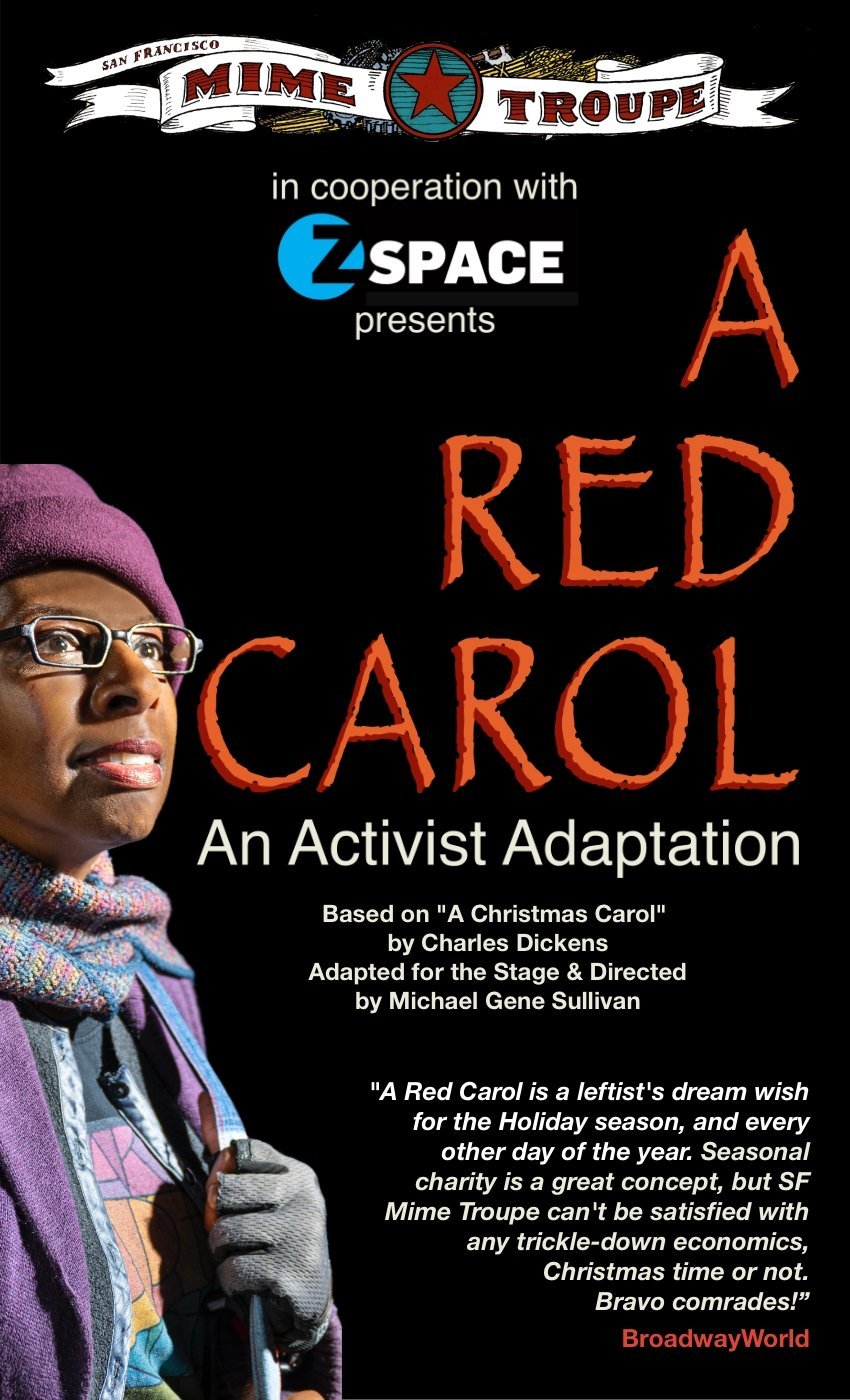
A Radical Twist on a Classic: SF Mime Troupe's "A Red Carol"

On Thursday, December 12th, I had the privilege of interviewing Michael Gene Sullivan, the Director of the SF Mime Troupe, on The Morning Show at KSVY Sonoma. We dove deep into their holiday production, A Red Carol, opening on December 14th. This year's remix of Charles Dickens's classic A Christmas Carol is unlike any version you've seen before. The SF Mime Troupe has remixed the timeless tale to emphasize its original message of societal change and activism, bringing a fresh perspective to a beloved story.

Michael shared his insights into the play's radical reimagining of the classic narrative, bringing economic disparity, class struggle, and the need for social transformation to light.

The play features the same iconic characters from the original but with a twist. A Red Carol places Scrooge's transformation within the context of a more politically charged atmosphere. The Spirits of Christmas — past, present, and future — are not only guiding Scrooge toward personal redemption but also calling for a larger societal reckoning. The Troupe's version is a call to action, reminding us that the changes we need as a society go beyond individual change and extend to systemic and structural issues.

During the broadcast, I also had the opportunity to share the first five minutes of the radio play version of A Red Carol, which is available for donation on Bandcamp. This unique production lets audiences experience the Mime Troupe's radical take on the story in an audio format, bringing the powerful messages of the performance straight to your ears. It's a perfect way to engage with the production if you cannot attend in person, and I highly recommend listening. The first five minutes of the radio play truly set the tone for the entire show, featuring a lively, energetic dialogue that addresses current issues with a touch of humor and sharp wit.

Z Space, San Francisco

Following my interview and radio segment, I attended Z-Space in San Francisco to see the live performance of A Red Carol. Z-Space is a fantastic venue—an intimate space perfect for raw, stripped-down productions that can confront the audience with the production by practically sitting in your lap; the black-box style layout allows for a close, personal experience with the performance. It's the ideal space for the Mime Troupe's blend of physical theater and political commentary, where the actors' energy and emotion can honestly fill the room.

The performance was a blast! The actors brought vibrant energy to their roles, balancing the play's sharp critiques with the humor and charm the Mime Troupe is known for. The set was minimal, allowing the storytelling to shine. At the same time, the use of live music, sound effects, and the actor's musical physicality in their performances added meaning to the dialogue.

What stood out most was how the story not only reflected on personal transformation but also called for collective change—a powerful reminder that Dickens' message of redemption was never just about the individual but about addressing the broader societal systems that perpetuate inequality.

As I sat in the audience, it was clear that A Red Carol is more than just a holiday performance; it's a timely piece of theater that invites us to examine our world today. In a year that brought social and economic upheaval, the SF Mime Troupe's play couldn't be more relevant. It challenges audiences to consider their own roles in society. It calls for action — not only in the spirit of the holidays but in the spirit of community and justice.

If you missed the interview with Michael, don't worry! You can still listen to our entire conversation on KSVY. Follow the link below to access the recording:

{Interview Link}


Also, check out the radio play version of A Red Carol on Bandcamp. The radio play is available by donation, allowing you to engage with the production and support the Troupe's nonprofit mission. You can find it here:

https://sfmt.bandcamp.com/track/a-red-carol

Finally, I encourage you to visit the SF Mime Troupe's website to support its important work. The Troupe has been producing socially relevant theater for decades and continues to inspire audiences to think critically about the world around them.

https://www.sfmt.org

Beyond the holiday season, don't miss the chance to experience A Red Carol and other works by the indomitable SF Mime Troupe. It's a radical, refreshing reminder of the power of theater to spark change and engage audiences in conversations about class, justice, and the future we want to create together.

The 2025 Doomsday Clock Announcement is Tomorrow: What You Need to Know

Learn about the 2025 Doomsday Clock announcement happening January 28, 2025, at the U.S. Institute of Peace in Washington, DC. Explore global risks like nuclear threats, climate change, and AI, and hear insights from experts Rachel Bronson and Scott Yundt. Stay informed with archived interviews and details on this critical event.

Read More

In Loving Memory of Marguerite Callaway

It has been over a month since Marguerite passed, and I am still processing the immense loss. Her presence grounded me, her encouragement fueled my idealism, and her wisdom shaped my understanding of leadership. Marguerite’s legacy is one of hope, courage, and transformation.

To all who knew her and to those just discovering her work, I hope this tribute serves as a reminder of the profound impact one individual can have on the world. Marguerite, thank you for everything. You are deeply missed.

Read More

Exploring Global and Local Issues: January 16, 2025 Morning Show Recap & Archive Links

Exploring Global and Local Issues: January 16, 2025 Morning Show Recap

On January 16, 2025, I had the privilege of hosting an incredibly thought-provoking episode of The Morning Show. We explored a diverse range of topics, from deep ancestral healing to urgent global security concerns, blending personal stories and far-reaching global issues in a way that felt both powerful and timely.

Read More

The Doomsday Clock: A Warning for Humanity

The Doomsday Clock, one of the most recognizable symbols of global peril, is set to make headlines again. On January 28th, 2025, the Bulletin of the Atomic Scientists will unveil the new time for the Doomsday Clock in Washington, DC. This annual ritual is not just a marker of time but a sobering reflection of humanity’s progress—or regression—in confronting existential threats.

Doomsday Clock Logo

Since its creation in 1947, the Doomsday Clock has been a metaphorical countdown to global catastrophe. Born from the minds of Albert Einstein, J. Robert Oppenheimer, and other scientists who developed the first atomic weapons during the Manhattan Project, the Clock was initially a response to the threat of nuclear war. Over the decades, its scope has expanded to include dangers posed by climate change, biological risks, and disruptive technologies. The closer the Clock’s hands move to midnight, the greater the peril.

Today, the Doomsday Clock is by the Bulletin’s Science and Security Board (SASB) in consultation with its Board of Sponsors, which includes nine Nobel laureates. Considering many global challenges, this esteemed group assesses humanity’s vulnerability to catastrophe. For 2025, these include nuclear proliferation, artificial intelligence, the ongoing Russia-Ukraine war, escalating conflicts in the Middle East, bio-threats, and the worsening climate crisis. These interconnected issues paint a picture of a fragile world, teetering on the edge of disaster.

The Science and Security Board: Experts at the Forefront

The SASB comprises internationally recognized leaders in science, policy, and security. They bring deep expertise to the complex task of evaluating the global landscape. In previous years, the Clock’s setting has captured international attention, with notable figures like former UN Secretary-General Ban Ki-Moon and former Irish President Mary Robinson lending their voices to this urgent call for action.

This year’s announcement promises to be no less consequential. As the world grapples with unprecedented challenges—from the rapid advancements and ethical dilemmas of artificial intelligence to the stark realities of a warming planet—the Clock’s setting will serve as both a warning and a rallying cry for change.

Exclusive Interviews on KSVY Sonoma 91.3 FM

Rachel Bronson - President & CEO Bulletin of Atomic Scientists

Rachel Bronson - President & CEO Bulletin of Atomic Scientists

I will host two exclusive interviews on my morning show on KSVY Sonoma 91.3 FM in anticipation of this momentous event. These conversations will delve into the critical issues shaping the Doomsday Clock’s 2025 setting and its broader implications for humanity.

On Thursday, January 16th, at 8:40 AM, I’ll speak with Rachel Bronson, President and CEO of the Bulletin of the Atomic Scientists. Dr. Bronson has been at the helm of this vital organization, guiding its mission to educate the public and policymakers about the dangers we face. Her insights will provide a window into the rigorous process behind setting the Clock and the key factors influencing this year’s decision.

The following week, on Thursday, January 23rd, at 9:00 AM, I’ll be joined by Scott Yundt, Executive Director of Tri-Valley CAREs. Near the Livermore National Laboratory, this grassroots organization has steadfastly advocated nuclear disarmament and environmental justice. Mr. Yundt will illuminate the local and global impacts of nuclear weapons development and the urgent need for activism in the face of mounting threats.

Both interviews will be broadcast live on KSVY Sonoma 91.3 FM and streamed worldwide at ksvy.org. They promise to be enlightening and thought-provoking, offering listeners a deeper understanding of the critical issues shaping our collective future.

Why the Doomsday Clock Matters

The Doomsday Clock is more than just a symbolic gesture; it is a call to action. Its annual setting serves as a stark reminder of the choices humanity faces and the consequences of inaction. As we approach January 28th, the world waits with bated breath to see whether the Clock will move closer to or further from midnight. Will we rise to the challenges before us, or will we continue down a path of increasing danger?

Join me over the next two weeks as we explore these questions with leading experts. Together, let’s confront the urgent issues that shape our world and work toward a safer, more sustainable future. Tune in, stay informed, and be part of the conversation.

Missed the Final Radical Creatives of 2024? Catch the Replay!

Thank you to everyone who tuned in for a night of funky House, Jungle, Drum & Bass, and epic melodic festival sounds! If you missed it or want to experience it again, you can catch the replay now:

Hour 1 (10 PM): https://s3-us-west-1.amazonaws.com/.../KSVY_2024-12-27...

Hour 2 (11 PM): https://s3-us-west-1.amazonaws.com/archives.ksvy.org/KSVY_2024-12-27__23_02_23.mp3

Radical Creatives will return in 2025 with more cosmic beats and transformative sounds. In the meantime, explore the KSVY archive at ksvy.org/ksvy-archives for past episodes.

Thank you for making 2024 a year of incredible music and connection. Let’s keep the rhythm alive into the new year! KSVY Sonoma